• Home
  • About us
  • RSF News
  • Contact us
  • 中文 (简)
  • 中文 (繁)
  • Українська
  • Español
  • Français
  • العربية
  • ไทย
  • Other languages

Follow us

  • facebook-alt
  • bluesky
  • instagram
  • linkedin
Banner Site logo

Resources for Journalists

  • Services
    • Safety guide
    • Training programmes
    • Digital Security Lab
    • Collateral Freedom
    • Spyware detection
    • Fellowship opportunities
  • Resources
    • Digital safety
    • Physical safety
    • Mental health
    • Legal advice
    • OSINT
    • External resources
    • Test your knowledge
  • Services
    • Safety guide
    • Training programmes
    • Digital Security Lab
    • Collateral Freedom
    • Spyware detection
    • Fellowship opportunities
  • Resources
    • Digital safety
    • Physical safety
    • Mental health
    • Legal advice
    • OSINT
    • External resources
    • Test your knowledge
  • Physical safety

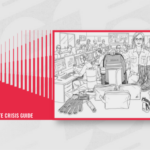
    HEAT for journalists (Part 1):
    Preparing for civil unrest

    Read more
  • Digital safety

    Protecting women journalists: what newsrooms should do within the first 24 hours of an online attack

    Read more

FOCUS

  • Protecting women journalists: what newsrooms should do within the first 24 hours of an online attack

    Digital safety  ·  06/03/2026
  • Speaking out to protect others: women journalist’ testimonies from Thailand

    Digital safety  ·  02/03/2026
  • “What’s up Doxx?” (Part 1):
    Define the perimeter of your online privacy

    Digital safety  ·  05/03/2025
  • “Journalism and trauma” Part 1:
    The personal toll of reporting

    Mental health  ·  26/12/2024
  • Reporting from authoritarian regimes (Part 2): Advice to journalists and newsrooms

    Legal advice  ·  20/06/2024
  • Cyberharassment Part 1: stalking and swatting

    Digital safety  ·  04/12/2023
  • Don’t get phished! Part 1: What are phishing scams?

    Digital safety  ·  11/10/2023
  • How to react if a military attack occurs

    Physical safety  ·  02/10/2023
All posts

Resources by topic

Digital safety
Physical safety
Mental health
Legal advice
OSINT
Test your knowledge

Toolbox

RSF Safety Guide for Journalists
External resources
India Toolbox
Read more
Hong Kong
Read more

Instagram

L'appel à candidatures du prix RSF de la photo “Lucas Dolega-SAIF” est lancé ce mardi 17 mars, pour une durée d'un mois. Adressé aux photojournalistes professionnels, ce prix vise à soutenir et à encourager leur travail, exercé dans des conditions difficiles ou sur des zones à risques. 

Dénommé “Lucas Dolega-SAIF”, en mémoire du jeune photojournaliste tué en 2011, ce prix récompensera un photographe qui, par son engagement personnel, son implication sur le terrain et la qualité de son travail, aura participé à la liberté de l’information.

✦ Candidatez jusqu'au 17 avril !
✦ Lien en bio pour plus d'informations.

—
The call for applications for the “Lucas Dolega-SAIF” RSF Photo Prize opens today, 17 March, and will continue for one month. Reserved for professional photojournalists, this prize aims to support and encourage their work in difficult conditions or high-risk areas.

Called the “Lucas Dolega-SAIF” Prize in memory of a young photojournalist killed in 2011, this prize will be awarded to a photographer who, through their personal commitment, their involvement in the field and the quality of their work, has contributed to press freedom.
✦ Apply by April 17!
✦ Check the link in our bio for more information.

Crédit photo : @robin_tutenges
L'appel à candidatures du prix RSF de la photo “Lucas Dolega-SAIF” est lancé ce mardi 17 mars, pour une durée d'un mois. Adressé aux photojournalistes professionnels, ce prix vise à soutenir et à encourager leur travail, exercé dans des conditions difficiles ou sur des zones à risques. 

Dénommé “Lucas Dolega-SAIF”, en mémoire du jeune photojournaliste tué en 2011, ce prix récompensera un photographe qui, par son engagement personnel, son implication sur le terrain et la qualité de son travail, aura participé à la liberté de l’information.

✦ Candidatez jusqu'au 17 avril !
✦ Lien en bio pour plus d'informations.

—
The call for applications for the “Lucas Dolega-SAIF” RSF Photo Prize opens today, 17 March, and will continue for one month. Reserved for professional photojournalists, this prize aims to support and encourage their work in difficult conditions or high-risk areas.

Called the “Lucas Dolega-SAIF” Prize in memory of a young photojournalist killed in 2011, this prize will be awarded to a photographer who, through their personal commitment, their involvement in the field and the quality of their work, has contributed to press freedom.
✦ Apply by April 17!
✦ Check the link in our bio for more information.

Crédit photo : @robin_tutenges
•
Follow
L'appel à candidatures du prix RSF de la photo “Lucas Dolega-SAIF” est lancé ce mardi 17 mars, pour une durée d'un mois. Adressé aux photojournalistes professionnels, ce prix vise à soutenir et à encourager leur travail, exercé dans des conditions difficiles ou sur des zones à risques. Dénommé “Lucas Dolega-SAIF”, en mémoire du jeune photojournaliste tué en 2011, ce prix récompensera un photographe qui, par son engagement personnel, son implication sur le terrain et la qualité de son travail, aura participé à la liberté de l’information. ✦ Candidatez jusqu'au 17 avril ! ✦ Lien en bio pour plus d'informations. — The call for applications for the “Lucas Dolega-SAIF” RSF Photo Prize opens today, 17 March, and will continue for one month. Reserved for professional photojournalists, this prize aims to support and encourage their work in difficult conditions or high-risk areas. Called the “Lucas Dolega-SAIF” Prize in memory of a young photojournalist killed in 2011, this prize will be awarded to a photographer who, through their personal commitment, their involvement in the field and the quality of their work, has contributed to press freedom. ✦ Apply by April 17! ✦ Check the link in our bio for more information. Crédit photo : @robin_tutenges
4 hours ago
View on Instagram |
1/6
Two journalists sentenced to three and a half more years in prison
Accused of “spreading fake news” and “defamation,” Tunisian-French journalist Mourad Zeghidi and his Tunisian colleague Borhen Bsaies were initially sentenced on appeal in July 2024 to eight months in prison. This resulted in the permanent cancellation of “L’émission impossible” on Radio IFM, one of the country’s most popular programmes.
On 22 January 2026, a court sentenced them to three and a half more years in prison. The exact date of the appeal hearing is still pending.
A journalist’s place is not behind bars but in the newsroom, working to provide quality journalism, which remains, ultimately, the best defense against the disinformation currently plaguing the public sphere. We call for the immediate and unconditional release of journalists Mourad Zeghidi and Borhen Bsaie.
–
Trois ans et demi de prison supplémentaires pour deux journalistes 

Accusés de “diffusion de fausses nouvelles” et “fausses déclarations dans le but de diffamer autrui”, le journaliste tuniso-français Mourad Zeghidi et son confrère tunisien Borhen Bsaies ont d’abord été condamnés en appel en juillet 2024 à huit mois de prison. En conséquence : l'arrêt définitif de “L'émission impossible” sur Radio IFM, l'une des émissions les plus suivies du pays. 

Le 22 janvier 2026, un tribunal les a condamnés à trois ans et demi de prison supplémentaires. La date précise de l’audience en appel est toujours attendue.

La place d'un journaliste n'est pas derrière les barreaux, elle est dans les rédactions, au service d'une information de qualité qui reste, en définitive, le meilleur rempart contre la désinformation qui gangrène aujourd'hui l'espace public. Nous appelons à la libération immédiate et inconditionnelle des journalistes Mourad Zeghidi et Borhen Bsaies.
Two journalists sentenced to three and a half more years in prison
Accused of “spreading fake news” and “defamation,” Tunisian-French journalist Mourad Zeghidi and his Tunisian colleague Borhen Bsaies were initially sentenced on appeal in July 2024 to eight months in prison. This resulted in the permanent cancellation of “L’émission impossible” on Radio IFM, one of the country’s most popular programmes.
On 22 January 2026, a court sentenced them to three and a half more years in prison. The exact date of the appeal hearing is still pending.
A journalist’s place is not behind bars but in the newsroom, working to provide quality journalism, which remains, ultimately, the best defense against the disinformation currently plaguing the public sphere. We call for the immediate and unconditional release of journalists Mourad Zeghidi and Borhen Bsaie.
–
Trois ans et demi de prison supplémentaires pour deux journalistes 

Accusés de “diffusion de fausses nouvelles” et “fausses déclarations dans le but de diffamer autrui”, le journaliste tuniso-français Mourad Zeghidi et son confrère tunisien Borhen Bsaies ont d’abord été condamnés en appel en juillet 2024 à huit mois de prison. En conséquence : l'arrêt définitif de “L'émission impossible” sur Radio IFM, l'une des émissions les plus suivies du pays. 

Le 22 janvier 2026, un tribunal les a condamnés à trois ans et demi de prison supplémentaires. La date précise de l’audience en appel est toujours attendue.

La place d'un journaliste n'est pas derrière les barreaux, elle est dans les rédactions, au service d'une information de qualité qui reste, en définitive, le meilleur rempart contre la désinformation qui gangrène aujourd'hui l'espace public. Nous appelons à la libération immédiate et inconditionnelle des journalistes Mourad Zeghidi et Borhen Bsaies.
•
Follow
Two journalists sentenced to three and a half more years in prison Accused of “spreading fake news” and “defamation,” Tunisian-French journalist Mourad Zeghidi and his Tunisian colleague Borhen Bsaies were initially sentenced on appeal in July 2024 to eight months in prison. This resulted in the permanent cancellation of “L’émission impossible” on Radio IFM, one of the country’s most popular programmes. On 22 January 2026, a court sentenced them to three and a half more years in prison. The exact date of the appeal hearing is still pending. A journalist’s place is not behind bars but in the newsroom, working to provide quality journalism, which remains, ultimately, the best defense against the disinformation currently plaguing the public sphere. We call for the immediate and unconditional release of journalists Mourad Zeghidi and Borhen Bsaie. – Trois ans et demi de prison supplémentaires pour deux journalistes Accusés de “diffusion de fausses nouvelles” et “fausses déclarations dans le but de diffamer autrui”, le journaliste tuniso-français Mourad Zeghidi et son confrère tunisien Borhen Bsaies ont d’abord été condamnés en appel en juillet 2024 à huit mois de prison. En conséquence : l'arrêt définitif de “L'émission impossible” sur Radio IFM, l'une des émissions les plus suivies du pays. Le 22 janvier 2026, un tribunal les a condamnés à trois ans et demi de prison supplémentaires. La date précise de l’audience en appel est toujours attendue. La place d'un journaliste n'est pas derrière les barreaux, elle est dans les rédactions, au service d'une information de qualité qui reste, en définitive, le meilleur rempart contre la désinformation qui gangrène aujourd'hui l'espace public. Nous appelons à la libération immédiate et inconditionnelle des journalistes Mourad Zeghidi et Borhen Bsaies.
7 hours ago
View on Instagram |
2/6
Nous dénonçons l'interdiction d'accès au QG de la candidate à la mairie de Paris Rachida Dati par son équipe aux journalistes du @nouvelobs, lors du premier tour des municipales, hier. Une entrave flagrante à la liberté de la presse dans la couverture d'un événement d'intérêt général.

@rachida.dati
#france #électionsmunicipales #rsf
•
Follow
Nous dénonçons l'interdiction d'accès au QG de la candidate à la mairie de Paris Rachida Dati par son équipe aux journalistes du @nouvelobs, lors du premier tour des municipales, hier. Une entrave flagrante à la liberté de la presse dans la couverture d'un événement d'intérêt général. @rachida.dati #france #électionsmunicipales #rsf
1 day ago
View on Instagram |
3/6
China is attempting to reshape the global information landscape — here's how.

China is the largest jail for journalists in the world. Since Xi Jinping came to power in 2012, the regime has extended its influence well beyond China’s own borders to impose an “ideologically correct” narrative, deter criticism and cover up serious human rights violations.

After investigating Russian propaganda, the second edition of our Propaganda Monitor will now expose the methods used by Beijing to spread its propaganda, undermine independent journalism and impose an authoritarian model of governance — an operation posing a serious threat to democracies worldwide. 

Drawing on a series of investigations, interviews and analyses, the Propaganda Monitor uncovers an operation posing a serious threat to democracies around the world.

Explore the “Propaganda Monitor” today at rsf.org or via the link in bio.
–
La Chine veut remodeler l’ordre mondial de l’information et nous allons vous expliquer comment.

Le régime chinois, est celui qui emprisonne le plus de journalistes au monde. Depuis l’arrivée au pouvoir de Xi Jinping en 2012, il a étendu son influence bien au-delà de ses frontières pour imposer un vocabulaire “idéologiquement correct”, dissuader les critiques et dissimuler les violations graves des droits humains.

Nous allons vous dévoiler les méthodes utilisées par le régime chinois pour diffuser sa propagande, et vous permettre d’accéder à une information fiable, provenant de sources indépendantes et variées. À travers nos enquêtes, interviews et analyses, le projet Propaganda Monitor éclaire la campagne menée par Pékin pour affaiblir le journalisme indépendant et imposer un modèle autoritaire, qui représente une véritable menace pour les démocraties.

Découvrez le “Propaganda Monitor” sur rsf.org ou dans le lien en bio.
•
Follow
China is attempting to reshape the global information landscape — here's how. China is the largest jail for journalists in the world. Since Xi Jinping came to power in 2012, the regime has extended its influence well beyond China’s own borders to impose an “ideologically correct” narrative, deter criticism and cover up serious human rights violations. After investigating Russian propaganda, the second edition of our Propaganda Monitor will now expose the methods used by Beijing to spread its propaganda, undermine independent journalism and impose an authoritarian model of governance — an operation posing a serious threat to democracies worldwide. Drawing on a series of investigations, interviews and analyses, the Propaganda Monitor uncovers an operation posing a serious threat to democracies around the world. Explore the “Propaganda Monitor” today at rsf.org or via the link in bio. – La Chine veut remodeler l’ordre mondial de l’information et nous allons vous expliquer comment. Le régime chinois, est celui qui emprisonne le plus de journalistes au monde. Depuis l’arrivée au pouvoir de Xi Jinping en 2012, il a étendu son influence bien au-delà de ses frontières pour imposer un vocabulaire “idéologiquement correct”, dissuader les critiques et dissimuler les violations graves des droits humains. Nous allons vous dévoiler les méthodes utilisées par le régime chinois pour diffuser sa propagande, et vous permettre d’accéder à une information fiable, provenant de sources indépendantes et variées. À travers nos enquêtes, interviews et analyses, le projet Propaganda Monitor éclaire la campagne menée par Pékin pour affaiblir le journalisme indépendant et imposer un modèle autoritaire, qui représente une véritable menace pour les démocraties. Découvrez le “Propaganda Monitor” sur rsf.org ou dans le lien en bio.
1 day ago
View on Instagram |
4/6
The Uncensored Library was created in response to places where independent journalism is systematically blocked, censored, or criminalized.

The addition of a USA room to the Uncensored Library is not meant to suggest equivalence between the United States and countries with institutionalized state censorship, like Russia and China. Rather, it acknowledges the less obvious tactics that quasi-authoritarian and weakly democratic regimes employ to control, intimidate, or dismantle the media: restricted access, weakened norms, political and financial pressure, and the normalization of hostility toward the press.

These dynamics deserve attention precisely because they are subtler and more difficult to categorize than overt censorship. Sometimes they are also a challenge to illustrate. How do you highlight a story untold because of self-censorship, or manipulation of media ownership? Yet these issues matter. It matters when the FBI raids a journalist’s home, as they did to the Washington Post’s Hannah Natanson, confiscating her devices and gaining access to the identities of thousands of confidential government sources. It matters when federal agents arrest journalists for nothing more than doing their jobs, as they did to Don Lemon and Georgia Fort.

That’s why we built this room. 
No country is immune to press freedom threats or democratic backsliding. Defending access to reliable information requires vigilance in all political systems and by all citizens who value a free and open society.
•
Follow
The Uncensored Library was created in response to places where independent journalism is systematically blocked, censored, or criminalized. The addition of a USA room to the Uncensored Library is not meant to suggest equivalence between the United States and countries with institutionalized state censorship, like Russia and China. Rather, it acknowledges the less obvious tactics that quasi-authoritarian and weakly democratic regimes employ to control, intimidate, or dismantle the media: restricted access, weakened norms, political and financial pressure, and the normalization of hostility toward the press. These dynamics deserve attention precisely because they are subtler and more difficult to categorize than overt censorship. Sometimes they are also a challenge to illustrate. How do you highlight a story untold because of self-censorship, or manipulation of media ownership? Yet these issues matter. It matters when the FBI raids a journalist’s home, as they did to the Washington Post’s Hannah Natanson, confiscating her devices and gaining access to the identities of thousands of confidential government sources. It matters when federal agents arrest journalists for nothing more than doing their jobs, as they did to Don Lemon and Georgia Fort. That’s why we built this room. No country is immune to press freedom threats or democratic backsliding. Defending access to reliable information requires vigilance in all political systems and by all citizens who value a free and open society.
4 days ago
View on Instagram |
5/6
“Photography serves the enemy” – this hashtag launched in Saudi Arabia in early March sums up the campaign waged by the authorities to criminalise coverage of the war’s impact in Iran, under the pretext of protecting national security.

Authorities across the region are using the escalating violence around Iran as a dangerous pretext to tighten restrictions on press freedom, especially in the Gulf states, several of which already rank near the bottom of RSF’s World Press Freedom Index. Legitimate concerns about national security and the fight against propaganda must not impinge on the public’s right to information. Broad and loosely worded bans on covering events, in the name of security, violate this right and expose journalists to arrest and violence. Press freedom is not a luxury: it guarantees the existence of all other freedoms and must be defended, especially against regimes that have all too often flouted it.
 
----------

“Photographier sert l’ennemi” : le hashtag lancé en Arabie saoudite début mars résume la campagne des autorités pour criminaliser la couverture des conséquences de la guerre en Iran, sous prétexte de protéger la sécurité nationale. 

L’escalade de la violence autour de l’Iran sert de dangereux prétexte pour renforcer les restrictions à la liberté de la presse, en particulier dans les pays du Golfe, dont plusieurs figurent déjà parmi les derniers du Classement mondial de RSF. Les préoccupations légitimes de sécurité nationale et de lutte contre la propagande ne doivent pas porter atteinte au droit à l’information de la population. Les interdictions générales et floues de couvrir les événements, au nom de la sécurité, violent ce droit et exposent les journalistes aux arrestations et aux violences. La liberté de la presse n’est pas un luxe : elle garantit l’existence de toutes les autres, et elle doit être défendue, surtout contre des régimes qui l’ont trop souvent bafouée.
“Photography serves the enemy” – this hashtag launched in Saudi Arabia in early March sums up the campaign waged by the authorities to criminalise coverage of the war’s impact in Iran, under the pretext of protecting national security.

Authorities across the region are using the escalating violence around Iran as a dangerous pretext to tighten restrictions on press freedom, especially in the Gulf states, several of which already rank near the bottom of RSF’s World Press Freedom Index. Legitimate concerns about national security and the fight against propaganda must not impinge on the public’s right to information. Broad and loosely worded bans on covering events, in the name of security, violate this right and expose journalists to arrest and violence. Press freedom is not a luxury: it guarantees the existence of all other freedoms and must be defended, especially against regimes that have all too often flouted it.
 
----------

“Photographier sert l’ennemi” : le hashtag lancé en Arabie saoudite début mars résume la campagne des autorités pour criminaliser la couverture des conséquences de la guerre en Iran, sous prétexte de protéger la sécurité nationale. 

L’escalade de la violence autour de l’Iran sert de dangereux prétexte pour renforcer les restrictions à la liberté de la presse, en particulier dans les pays du Golfe, dont plusieurs figurent déjà parmi les derniers du Classement mondial de RSF. Les préoccupations légitimes de sécurité nationale et de lutte contre la propagande ne doivent pas porter atteinte au droit à l’information de la population. Les interdictions générales et floues de couvrir les événements, au nom de la sécurité, violent ce droit et exposent les journalistes aux arrestations et aux violences. La liberté de la presse n’est pas un luxe : elle garantit l’existence de toutes les autres, et elle doit être défendue, surtout contre des régimes qui l’ont trop souvent bafouée.
•
Follow
“Photography serves the enemy” – this hashtag launched in Saudi Arabia in early March sums up the campaign waged by the authorities to criminalise coverage of the war’s impact in Iran, under the pretext of protecting national security. Authorities across the region are using the escalating violence around Iran as a dangerous pretext to tighten restrictions on press freedom, especially in the Gulf states, several of which already rank near the bottom of RSF’s World Press Freedom Index. Legitimate concerns about national security and the fight against propaganda must not impinge on the public’s right to information. Broad and loosely worded bans on covering events, in the name of security, violate this right and expose journalists to arrest and violence. Press freedom is not a luxury: it guarantees the existence of all other freedoms and must be defended, especially against regimes that have all too often flouted it. ---------- “Photographier sert l’ennemi” : le hashtag lancé en Arabie saoudite début mars résume la campagne des autorités pour criminaliser la couverture des conséquences de la guerre en Iran, sous prétexte de protéger la sécurité nationale. L’escalade de la violence autour de l’Iran sert de dangereux prétexte pour renforcer les restrictions à la liberté de la presse, en particulier dans les pays du Golfe, dont plusieurs figurent déjà parmi les derniers du Classement mondial de RSF. Les préoccupations légitimes de sécurité nationale et de lutte contre la propagande ne doivent pas porter atteinte au droit à l’information de la population. Les interdictions générales et floues de couvrir les événements, au nom de la sécurité, violent ce droit et exposent les journalistes aux arrestations et aux violences. La liberté de la presse n’est pas un luxe : elle garantit l’existence de toutes les autres, et elle doit être défendue, surtout contre des régimes qui l’ont trop souvent bafouée.
4 days ago
View on Instagram |
6/6
View on Instagram

RSF Resources for Journalists

© 2025 Reporters Without Borders / Reporters sans frontières (RSF) — Designed by WPZOOM
Privacy Policy